Behind the scenes with team JBX and why Extreme H is unlike any race on Earth
London, UK, 30 June 2026: Picture this.
It’s day 14 of living in the desert. Temperatures hit 40°C in the day. The days start at 7am and finish at 10pm, always in the inescapable heat.
The technical challenge is enormous, unlike anything else in this space, and changing by the second. You need to grasp the complexities and possibilities of each update without overthinking.
You then have to switch on for the 10 minutes that matter. Any loss of focus or concentration, however tiny, however understandable, could at best result in losing to your competitors. At worst, it could be fatal.
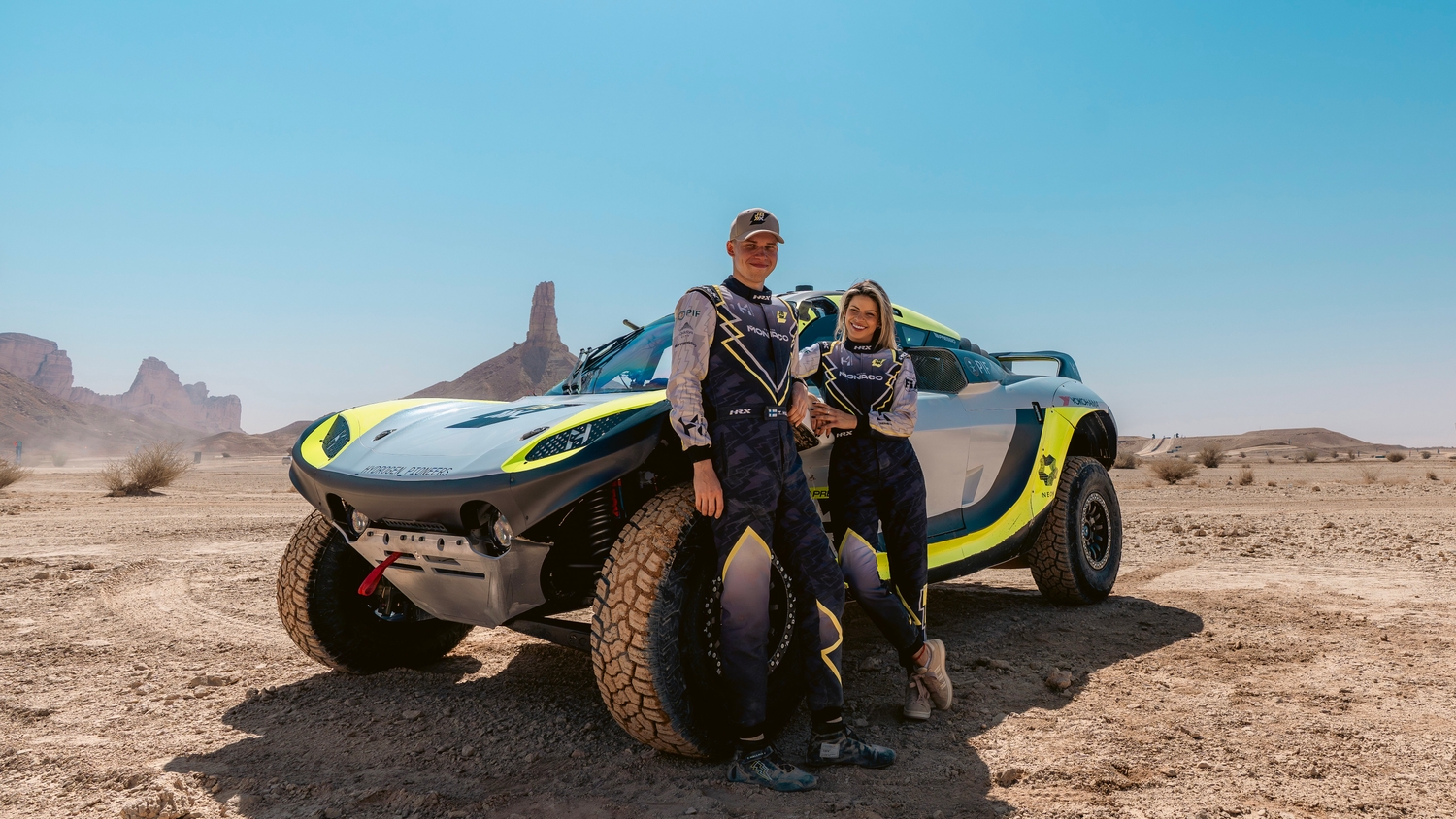
“There’s nothing quite like it,” says Tommi Hallman, the championship-winning Finnish racing driver who has triumphed in rallycross around the world and who competed in the first ever FIA Extreme H World Cup with JBX, the eponymous team headed by 2009 Formula One World Champion, Jenson Button.
“You cannot prepare for it. That’s what makes it such a challenge.”
His JBX team mate has raced in Extreme E, Dakar and Baja 1000, and agrees that Extreme H is a unique beast. “Those other races are intense but not in the same way,” says Christine Giampaoli Zonca (or GZ as she is affectionately known). “It’s the opposite problem. Here, the races are short and intense, you have to be on it, right away, every time.”
Furthermore, unlike other rallying formats, the hydrogen-electric Pioneer 25 racing car is strictly a single-seater. Without co-drivers and navigators, Extreme H racing drivers are out on the grueling off-road courses alone, with no one for company or advice except their engineer over the radio.
While it may look like a sprint from the outside, it turns out that competing in Extreme H is also a feat of endurance, a true test of mind, body and spirit.
JBX team manager Conor Hardiman puts it this way: “When you’re in a 40 degree temporary facility for eight hours, it can get hard to think. And it’s even hotter in the car. The physical toll at these events is massive for everybody.”
Here’s a peek behind the scenes at a typical day for an Extreme H race team.
Morning: where the day is won
The FIA Extreme H World Cup format suits early risers.
“We try to get in as early as possible – you can always find time at the start of a day, but not at the end,” says Hardiman.
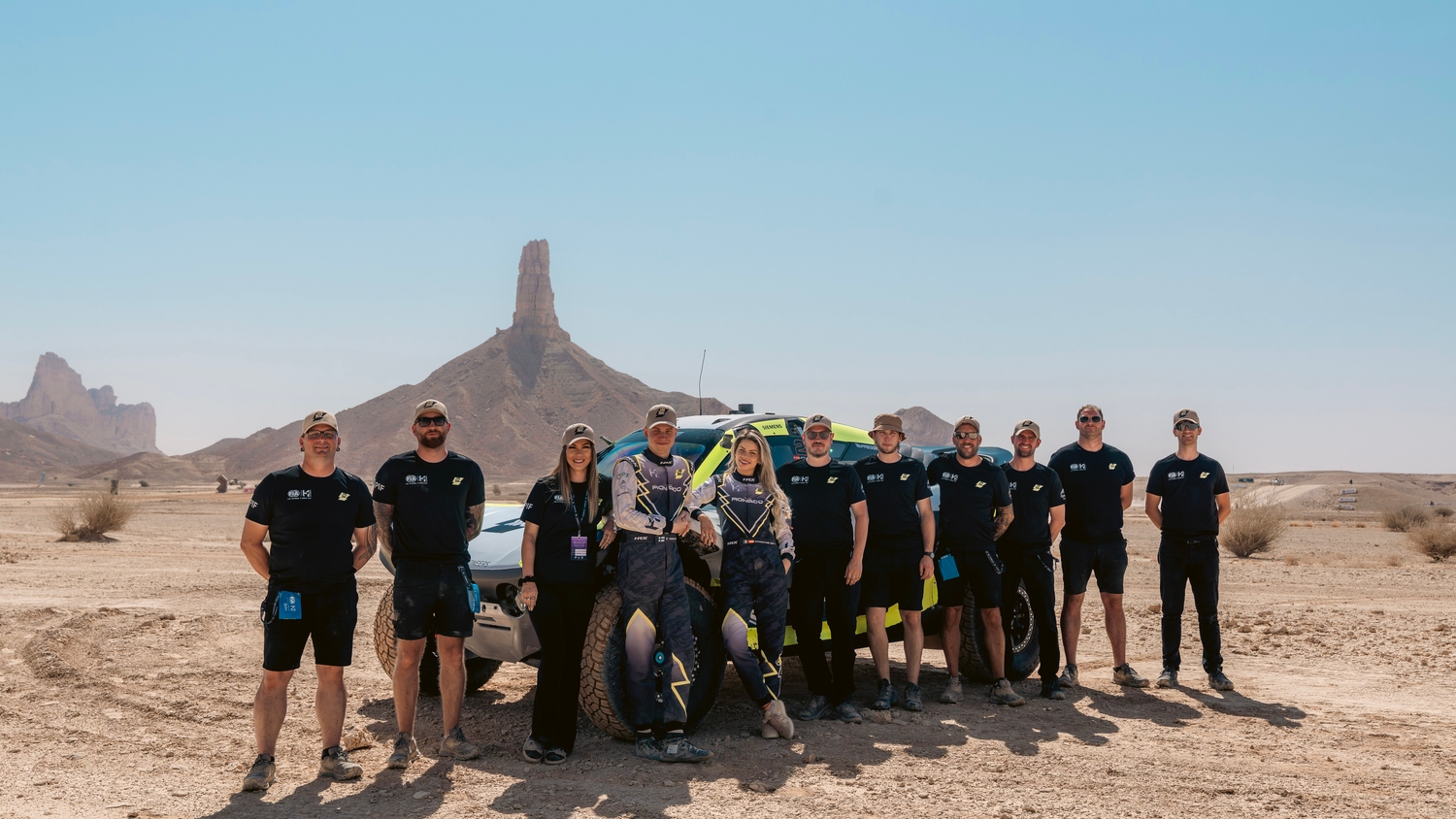
Teams are permitted into the paddock at 7am, and Hardiman’s team was there on the dot, every day. The JBX team of eight staff included engineers from the FIA Formula E World Championship and the FIA World Rally Championship.
“The Pioneer 25 presents a unique set-up challenge for both engineer and drivers,” Hardiman explains. “The car uses a hydrogen fuel cell to power two independent 200kW electric motors. One motor drives the front wheels and one drives the rear wheels.”
With this architecture, engineers are able to program different maps for both power and balance distribution that drivers can change “on the fly” - while they’re in the heat of battle.
But the Pioneer 25 also comes with another critical adjustable element: FOX live valve suspension, which introduces active damping that can also be changed on the go.
“We chose to partner with FOX because these components are proven to handle very long suspension travel, survive repeated high-energy impacts, maintain consistency in extreme heat and support fast set-up changes in temporary paddocks,” says Mark Grain, Technical Director at Extreme H.
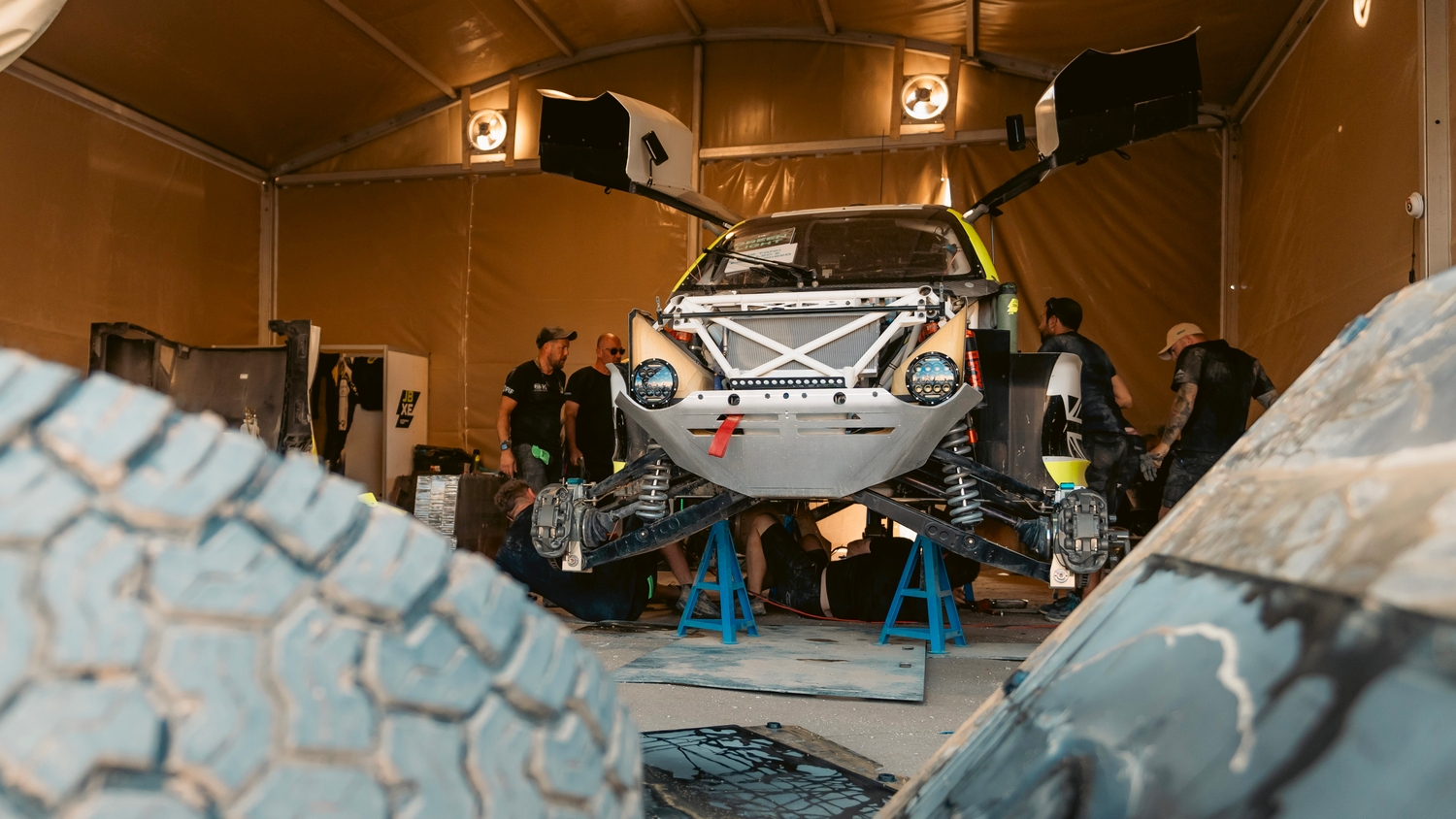
Together, all these controllable elements mean drivers and engineers can change many settings, from lap to lap and even from corner to corner. It’s a lot for engineers to plan, test, assess and program - and a lot for drivers to understand and feed back on.
“Every time the car turns a wheel, it has to have a plan,” Hardiman says. “Tommi and GZ are both clever drivers. They know what they want. That makes our jobs easier: we just have to provide the tools.”
While the mechanics are setting the cars up (and repairing any damage from the previous day) and the engineers are nose-deep in data, the drivers have their own morning routines.
“I was ready by 6am, because I don’t sleep well and I have ADHD,” says GZ. “I work out in the morning, and then I drive to the track with Tommi to meet the team around 8am. We have run plans to look at and video analysis to watch. No one is hungry on race day because you’re so nervous, but I try to get some carbs and protein, especially in the heat.”
Tommi agrees: “It’s difficult to eat breakfast on a race weekend. The pressure means you don’t feel like eating and the first run is quite early. I usually just start with tea in the car! After the first run, we analyse the data, to see where we can improve.”
Afternoon: race, review, repeat
The inaugural FIA Extreme H World Cup was unusually lengthy. The first week was dedicated to the final ever round of Extreme E, before the same drivers donned different suits and stepped into their hydrogen-powered race cars.
This meant that on top of spending a full two weeks in the challenging desert heat, drivers and engineers also had to switch midway to a brand new sport, with new courses, race formats, rules and technology.
In Extreme H, every team has two drivers. Built into the sporting regulation and therefore the very DNA of the sport are requirements that each driver pairing include one male and one female, that each session must feature both drivers, and that the starting driver in each session must alternate.
During the race, the rest of the team is based at the Command Centre, a short sprint from the “Switch Zone,” the nearest equivalent of a pitlane in circuit racing.
“Drivers are the biggest nightmare and the biggest influence on what we do,” laughs Hardiman.
“But it’s good having multiple drivers in a team, because the faster driver in any session gives you a reference and you can accelerate learning for the other. It’s similar in GT racing where we have a professional and an amateur driver. It’s rare that you can find significant lap time with the pro, but you can with the amateur. Similarly in Extreme H, it’s a competitive advantage if our slower driver is a fast learner.”
For the engineers, because the drivers share the car, this simplifies set-up permutations. “Typically, all drivers gravitate towards the fastest settings,” says Hardiman.
Hallman confirms: “One set-up is usually faster than the other. The other driver then has to do a bit more adapting. But between GZ and I, we didn’t have big changes. We were always on the same page. We used pretty much the same settings, and we tried to follow the same driving lines and deltas.”
“We look at the data from the fastest driver and that’s our baseline: that’s just how it is,” says GZ.
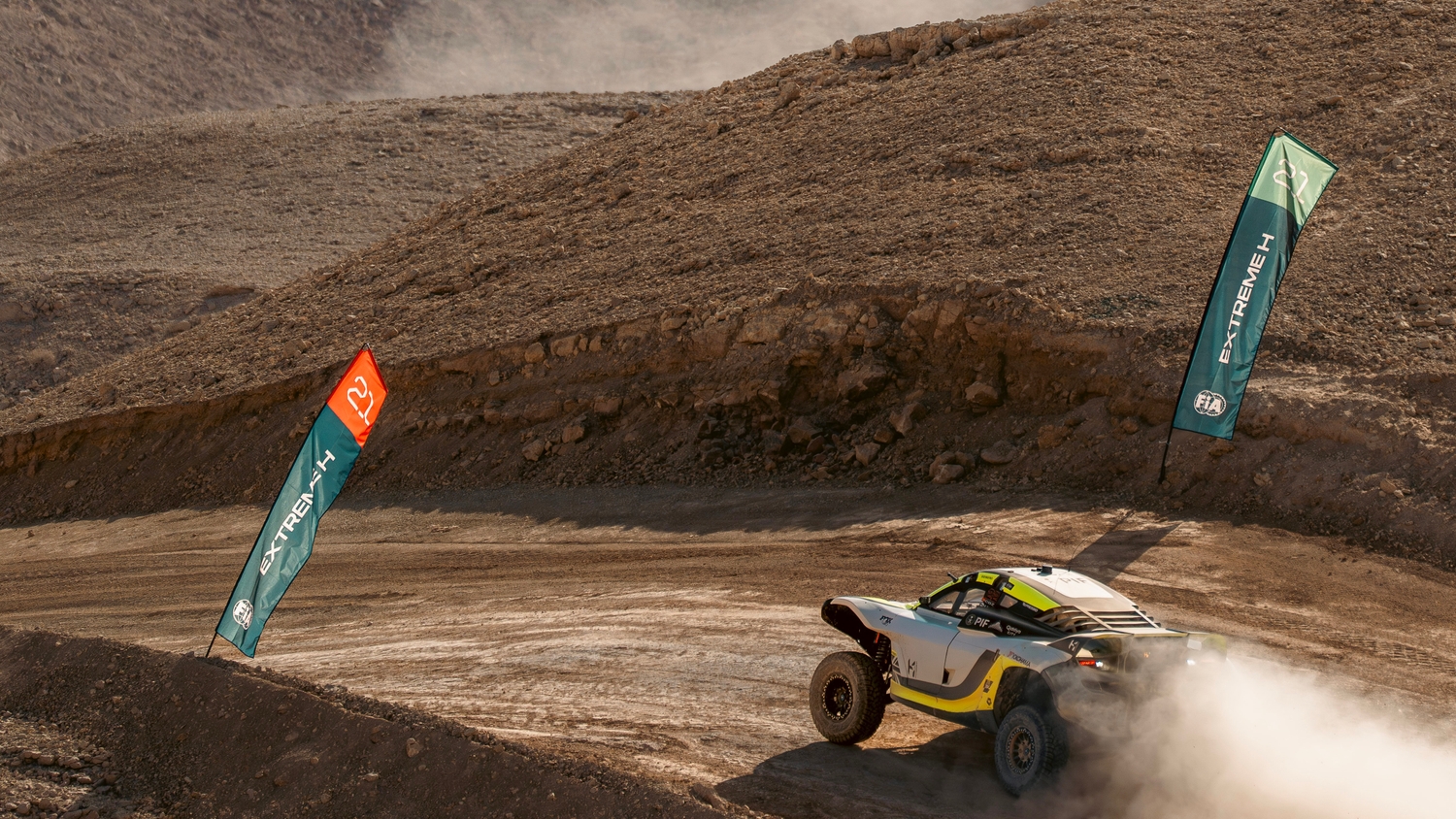
Driver swaps in Extreme H must be a minimum of 50 seconds for safety. In reality, this means there are a few seconds left over once the new driver has strapped in for them to adjust any switches and settings.
“The seat is in the middle of the car, so it’s a bit more complex to get in and get the safety belts fastened compared to the Extreme E car, where the seat placement was more conventional and close to the door,” says GZ. “That’s when the other driver will be back in the Command Centre and feeding back learnings from having just been out on the track.”
Different drivers like different information over the radio. For GZ, who is used to rallying where there’s always someone in the other seat, “it’s weird to have someone not talking to me.”
For Hallman, it’s a bit different: “I like to hear the gap to the car behind so I can manage my pace. If the gap is getting bigger, I can ease up a bit. It’s about taking the least risk. If you don’t have anything meaningful to say, then shut up. It’s as simple as that.”
Lunch comes next, and the whole paddock downs tools to eat together (unless the mechanics are repairing crash damage) before the cycle repeats through the late afternoon sun. Race, analyse data, adjust settings, race again.
Evening: late nights and one more video
Once running has concluded for the day (or a trophy lifted on race day), evenings are dedicated to preparing for the next day.
Hardiman says: “We like to finish the day with the car ready for the next day. Damage is repaired, decals are replaced. And we always try to decide a development route at the end of the day, for example, we’re going to go with stiffer dampers.”
For the drivers, the day isn’t quite over either.
“We look at all the data, but our focus is quite simple: trying to optimise performance,” says Hallman. But there’s a balance, he warns: “Too much data and you lose your natural driving instincts.”
GZ says: “At night, we are still working on the data. There’s always one more video. Then, dinner in the paddock and then back to your room to sleep.”
Around 11pm, silence finally falls across the Extreme H paddock and camp. A day full of heat (both solar and competitive) has faded into the darkness. Everyone enjoys a few hours of rest and respite before the dawn arrives, bringing with it the furnace of racing.
The view ahead: preparing for 2026
In May, the dates for the next edition of the FIA Extreme H World Cup were revealed: 29 to 31 October 2026.
With little more than four months to go, what lessons will give competitors an edge next time out in the Saudi Arabian desert?
“You can’t prepare for this type of racing,” Hallman says bluntly. “The tracks don’t exist long before we arrive and it’s never the same from day to day. I like it. You have to figure things out quickly, and it comes down to your natural driving abilities. You can’t learn from a book.”
With that said, Hallman would do some things differently: “I would hydrate better this year to optimise mental sharpness… and remember my sunscreen!”
To improve human performance, Hardiman adds: “We specify individual mineral levels and hydration levels for every person, and these have to be optimal before travelling. We then define electrolytes and carbohydrates every day.”
GZ has a more unique approach to preparing for the next World Cup: “I play padel and workout in the gym in the heat without air conditioning!”
The first FIA Extreme H World Cup featured inexorable heat, long days, volumes of data, ever-changing tracks, and high-performance cars with uniquely-adjustable settings producing only water from their tailpipes. It has left drivers and engineers with a sense of respectful awe at the challenge, and the objectives.
“We’re racing two-tonne SUVs and saving the world at the same time,” GZ concludes. “It’s pretty badass.”