Five game-changing lessons in automotive technology from the first-ever fully hydrogen powered off-road race, the FIA Extreme H World Cup
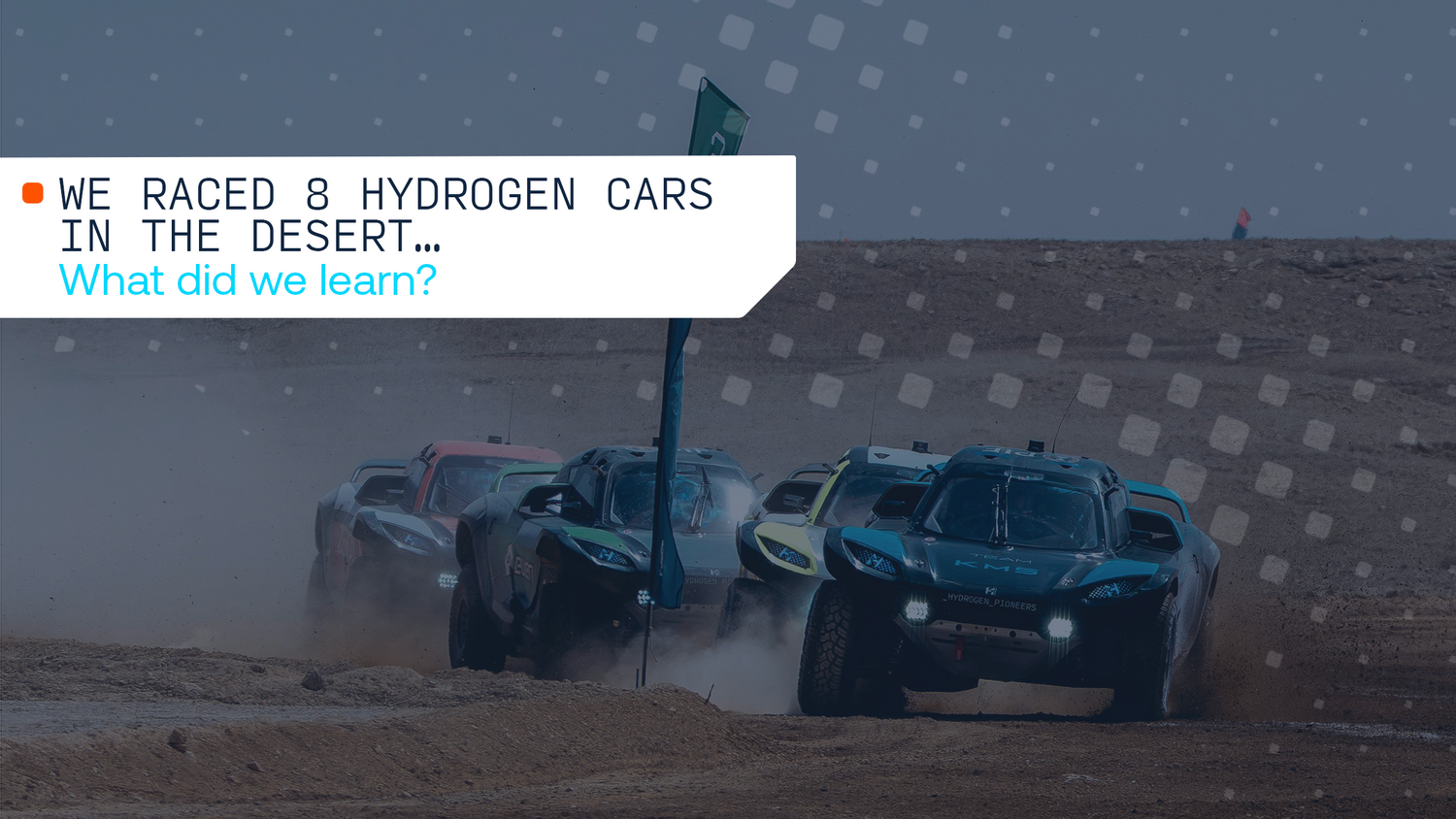
London, UK, 30 April 2026: The long-awaited first-edition of the FIA Extreme H World Cup, held in Qiddiya City, Saudi Arabia, was a genuine world-first and the learnings taken will reshape the future of sport and automotive technology.
For the first time, an entire grid of cars featuring hydrogen fuel cell propulsion technology raced through some of the most demanding conditions imaginable, showing the world that hydrogen technology is viable and ready for use.
Charged with delivering a fast, robust and safe racing vehicle to lead this new era in racing was Mark Grain, Extreme H’s Technical Director, alongside the FIA’s (the global governing body for motorsport) Extreme H Technical Manager, Vincent Gaillardot. With the technical team at the FIA, the group completed a huge amount of work prior to the inaugural FIA Extreme H World Cup.
Both possess a wealth of experience across multiple categories in motorsport, with Grain spending nearly three decades with McLaren across F1, IndyCar, Extreme E and Le Mans, including the legendary F1 GTR programme, whilst Gaillardot’s career spans across Renault F1 teams with Williams, Ligier and Benetton, before working with Jaguar, Toyota and Nissan’s varying programmes.
Now that the dust has settled from the FIA World Cup, they have outlined some key takeaways from its global debut.
1. Hydrogen technology is safe to race.
At the FIA Extreme H World Cup, eight vehicles, all powered by hydrogen fuel cells, tested and raced without mercy across a punishing series of time trials, head-to-head drag races with soaring jumps and intense wheel-to-wheel racing on a demanding desert course over six days.
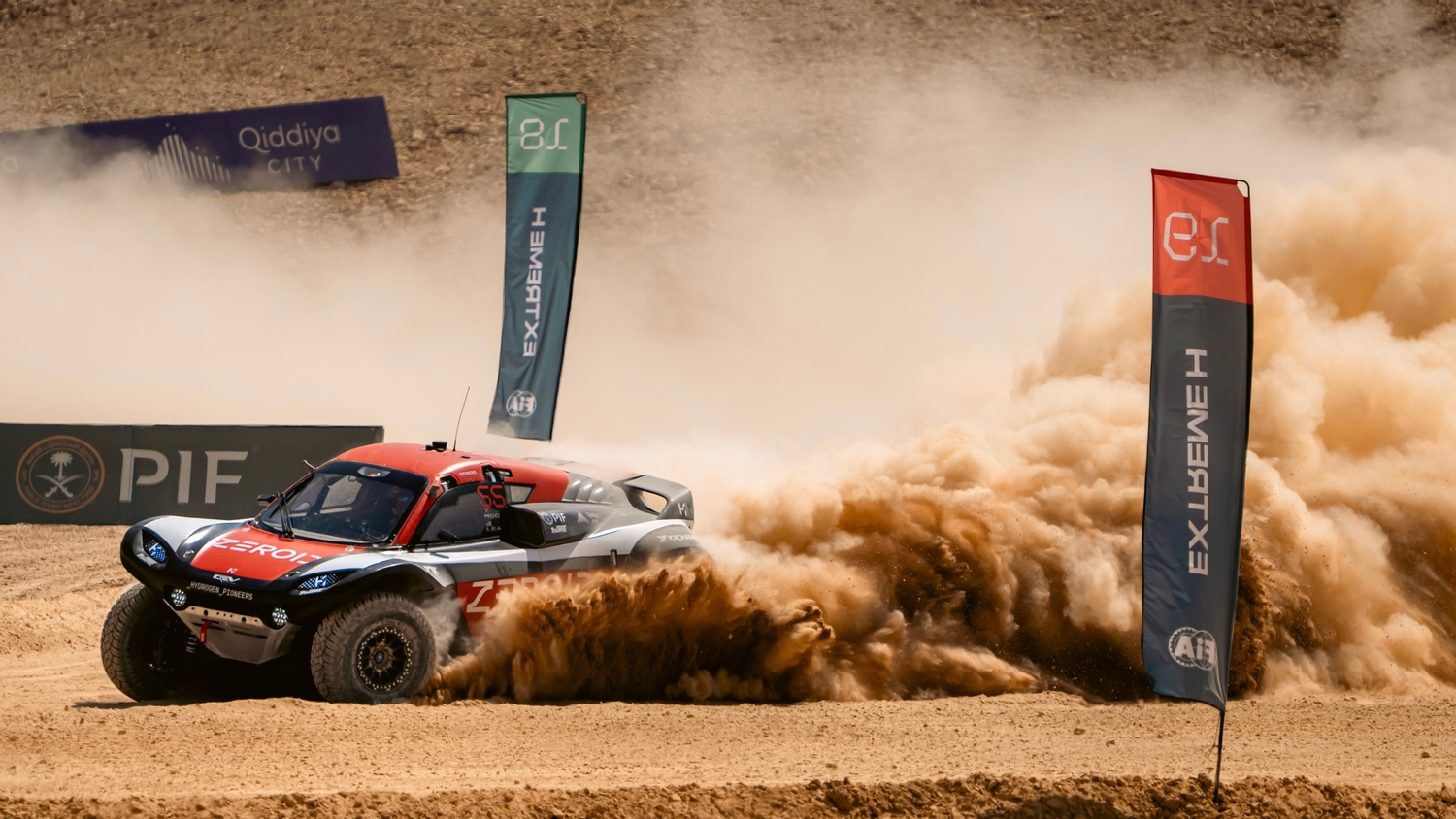
What happens when a first-of-its-kind hydrogen fuel cell system is fitted to a 2,200kg race car and then sent over jumps big enough to register 17g upon landing? Nothing. Absolutely nothing.
“I’m very pleased to say that after our drivers consistently put them through a pretty tough time, including a rollover at speed, we experienced zero safety issues - it’s an incredibly robust car.” says Grain
2. Hydrogen is safe for racing - and for the road.
“The first reaction from many people when we talk about hydrogen vehicles is to first ask about safety, particularly fire safety,” says Grain. “We had zero safety issues over six days of fierce competition - and the average road car will never see more than 10% of the forces the Pioneer 25 was subjected to.”
A key part of the process in having the car fully FIA homologated involved specific FIA crash testing procedures, which meant that while the Pioneer 25’s hydrogen fuel cell technology finds its origins in existing technologies, it needed to be rigorously tested to satisfy the FIA’s own stringent safety criteria.
Gaillardot highlights the extensive work carried out by the sport’s governing body in developing the safety regulations and processes ahead of the first edition of the World Cup: “As with every new category and technology in motorsport, we are working well in advance to define and implement the safety standards we need,” he said. “Without this, none of the rest can happen. We developed many new elements in Appendix J of the International Sporting Code.”
The FIA crash tests were extreme, and put the Pioneer 25 through some violent scenarios far beyond what it can ever expect to face on track, let alone public roads.
“There are specific requirements for hydrogen vehicles, things such as H2 detector sensors, specific crash tests for the survival cells and a full failure mode and effects analysis. All added together and it’s clear that we have applied the same rigorous standards for this new technology as we have for all of our categories.”
3. Hydrogen is remarkably reliable.
Throughout Grain’s extensive career spanning over 30 years in motorsport, he can count on one hand the number of times a major new powertrain was introduced and then raced without a single failure.
While the FIA Extreme H World Cup is not an endurance event, instead featuring a series of sprints and short races, the fleet of nine Pioneer 25 vehicles (including Extreme H’s own test vehicle) covered a total of 550km over race week, all without failure, despite the dusty terrain permeating the vehicles and ambient temperatures regularly reaching nearly 40°C.
“We did not have a single powertrain failure over our entire event,” Grain says. “At the World Cup, we also had eight teams, meaning eight sets of engineering brains that scrutinised not only the performance but also the operation and reliability of the race car - this was on top of the 3000km of testing run before the cars were given to the teams,”
Molly Taylor, winner of the inaugural World Cup alongside teammate Kevin Hansen, representing local outfit Jameel Motorsport, said of the new car: “There were so many unknowns going into the first Extreme H round - the track itself put big demands on the car, and despite its huge size and weight, it felt even more like a “race car”. It’s very raw motorsport!”
4. Refuelling is fast and easy.
The Pioneer 25 race car is a hybrid vehicle, powered by both an electric battery and a hydrogen fuel cell. The electric motors handle high-power energy bursts for acceleration, jumps and regenerative braking, and directly power the electric motors.
The fuel cell uses hydrogen gas to generate electricity, and provides a steady flow of energy to keep the battery charged. The only output from the vehicle is water.
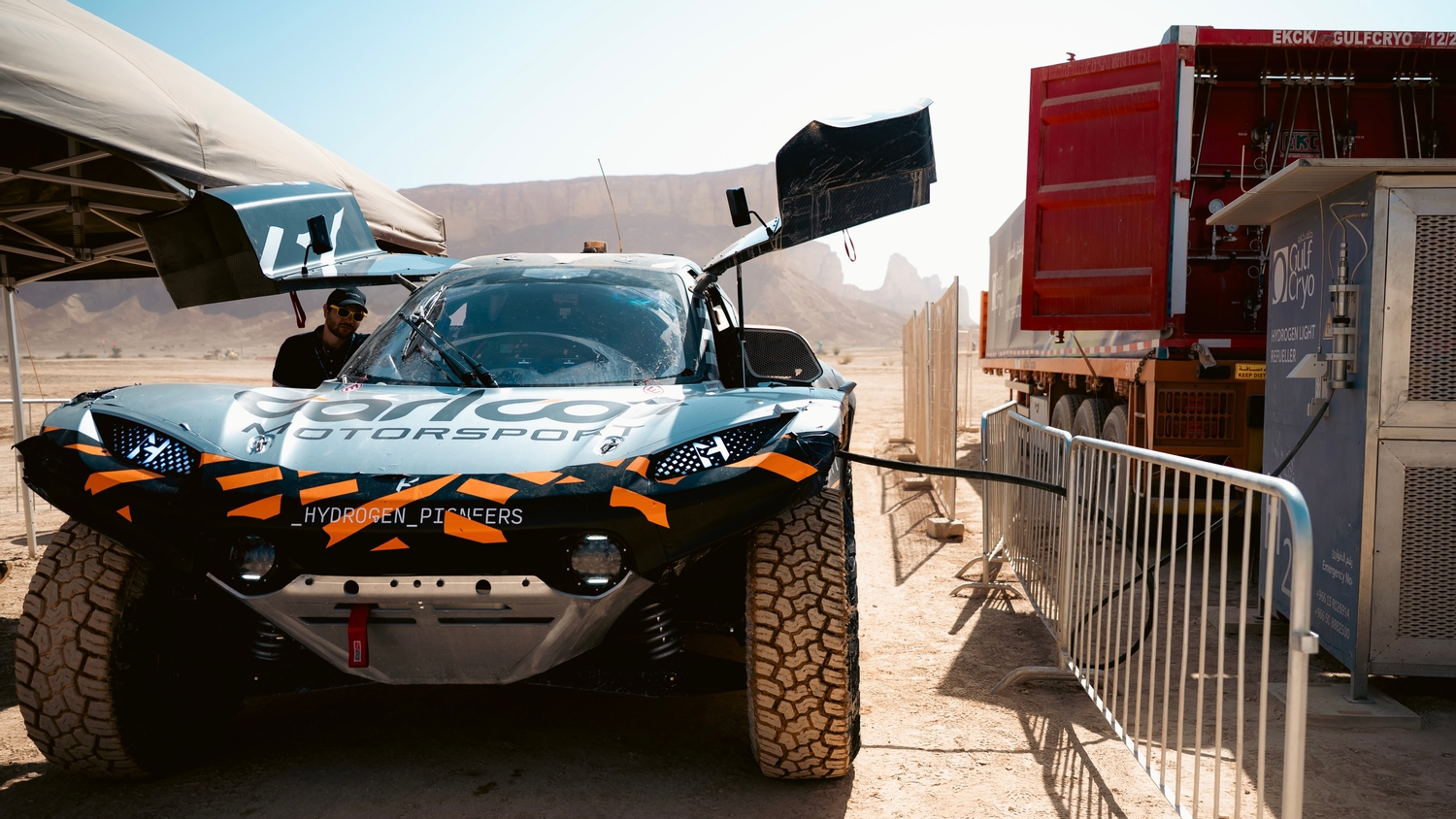
“The biggest advantage of this configuration is that we can refill hydrogen tanks in minutes and get back on track,” says Grain.
What does this mean beyond the racetrack? Extreme H races have proved the combined performance of an electric drivetrain alongside the convenience of fast refuelling in hot, dry and dusty conditions, demonstrating that hydrogen systems can play a part in decarbonising our mobility not only in cities, but also in industrial and off-road applications.
5. We’ve only scratched the surface of hydrogen’s potential.
Gaillardot puts the event into the global perspective of technological development. “Motorsport is the best laboratory to accelerate research and development and push boundaries to the limit,” he says. “This is relevant for new technologies and especially when we focus on clean mobility – hydrogen is a key part of that.
“The FIA Extreme H World Cup starts this journey with hydrogen gas and fuel cell technology, but we are looking at a technically diverse future that can be open to liquid hydrogen and combustion hydrogen engine technology. What really drives the direction we take will be relevance to the wider automotive industry – we need to give OEMs the opportunity to showcase their expertise and develop their own innovations that will have a direct benefit to the consumer automotive world.”
Continuing, Grain says: “As other racing series continue to explore adopting hydrogen technology, the FIA Extreme H World Cup has already demonstrated that hydrogen fuel cells are robust enough to mix it in the rough and tumble world of motorsport.”
Grain concludes: “We’re excited to showcase the incredible capability of hydrogen technology, and we’re looking forward to continuing to work with the FIA and global brands to build a technical roadmap that can deliver valuable lessons for the future of automotive innovation.”
ENDS